cars
2
Jislaaik! These 90s SUVs Were Absolute Beasts (And Cost a Fortune)
July 04, 2026
Jislaaik! These 90s SUVs Were Absolute Beasts (And Cost a Fortune)
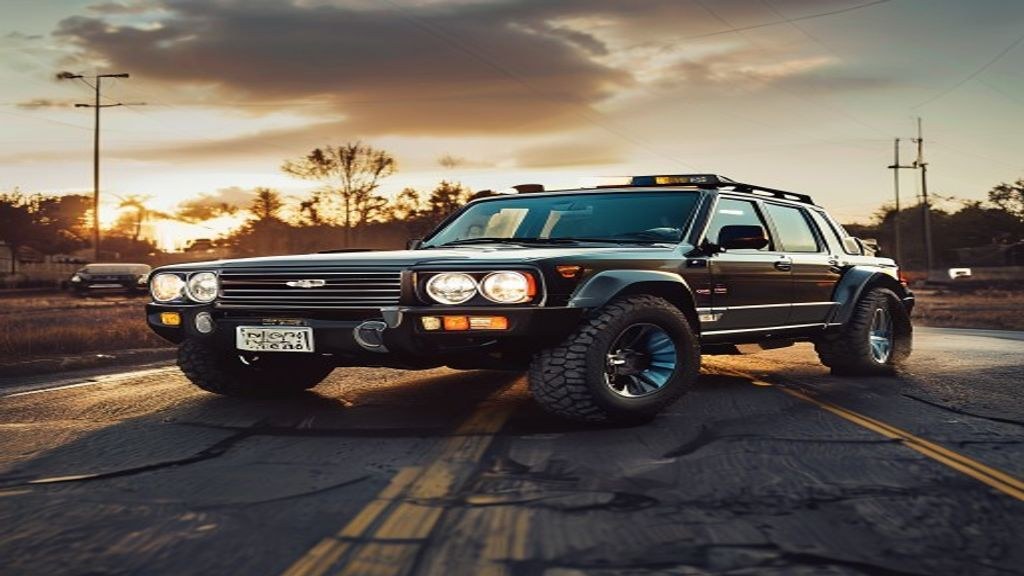
Before bakkies ruled the road, and before everyone decided they needed an SUV, there was a time when *this* was peak South African family transport – and they cost between $32,000 and $36,000 back then. (That's a LOT of rands, bru). We’re throwing it back to 1997 to compare the Chevrolet Suburban and Tahoe, the SUVs that defined a generation. These weren't just vehicles; they were statements. We'll break down their size, power, and quirks, and see if these behemoths still hold up today.
## The OG SUV: Why Your Dad Probably Wanted a Suburban
Let’s be honest, if your dad wasn’t eyeing up a Suburban in the 90s, he was probably busy perfecting his braai technique. This thing was *the* symbol of having made it. The Suburban concept hasn’t changed much since 1973, when GM sold 36,604 of them. But things escalated quickly – yearly sales more than tripled after that. Why? Well, it offered over 50 percent more cargo room than a full-size GM wagon. Eish, that’s a lot of space for the Checkers family picnic, or, you know, all the stuff you need for a proper Durban holiday.
It wasn’t just space, though. It was about feeling safe. Dad was worried about crush space in a head-on crash, and a full-size van didn’t offer the same peace of mind. Plus, the Suburban could tow up to 10,000 pounds if you ticked the right boxes. Try doing *that* with your average minivan – Chrysler’s Caravan/Voyager could only manage a third of that. Even a Jeep Grand Cherokee topped out at 6,700 pounds. This thing was built to *work*.
## Space to Spare: How Much Stuff Could These Things Actually Carry?
Seriously, these things were like mobile warehouses. The Suburban could inhale 150 cubic feet of cargo with the second seat folded forward and the third seat removed – and it only took a minute to do, without needing any tools. That’s a full 32 cubic feet more than the Tahoe and the Expedition. Think about that. You could fit an entire Nando’s catering order in there, plus enough biltong to survive load shedding for a week.
The Tahoe wasn’t exactly cramped, but it couldn’t quite match the Suburban’s sheer volume. It just didn’t have the same… *capacity* for life's essentials. It's like comparing a double-door fridge to a single-door one. Both keep things cold, but one is just on another level.
## So, How Did They Drive? (Spoiler: Not Like Your Modern SUV)
Okay, buckle up, because this is where things get interesting. According to the Car and Driver review, driving a Suburban was…an experience. "Numbness is the primary driving characteristic," they said. You had to step through an inch or so of mush in the brake pedal before *anything* happened, and the steering felt “vaguely connected,” requiring constant small corrections. It wasn’t exactly a Sandton cruise.
The 0-to-60 mph time of 10.4 seconds wasn't exactly setting any land speed records either. It's not slow, but it's definitely not the snappy acceleration you'd expect from a modern SUV. This wasn’t about performance, bru. It was about getting the job done, and doing it with a certain…gravitas.
## The Tahoe Tries to Slim Down: Was it a Better All-Rounder?
Chevrolet clearly realised the Suburban wasn't for everyone. Some people wanted the SUV life, but didn’t need to transport the entire rugby team. Enter the Tahoe. Fourteen inches were removed from the wheelbase, 20.9 inches from its length, and 1.9 inches from its height. The idea was to make it more “carlike,” appealing to those considering smaller SUVs or even minivans.
The Tahoe’s steering was still “lifeless,” but it didn’t require as much constant correction. And its turning circle was almost five feet narrower – a big deal when you’re trying to park in a Cape Town CBD parking garage. Car and Driver thought it offered a quieter ride too, thanks to passenger-car tires. It was a more refined experience, even if it wasn't exactly exhilarating.
## Blowing a Brake Cylinder and Peeling Tires: The Testing Snafus
Let's just say the Car and Driver testers had a bit of a time with these behemoths. During testing at the Chrysler proving grounds, they blew a rear-wheel brake cylinder on the Suburban, coating the wheel and tire in caustic brake fluid. Lovely. And up in Silver Lake, Michigan, they managed to peel a tire off the rim of the Tahoe *and* render the four-wheel-drive system of the Expedition nonfunctional. Jislaaik! These weren’t exactly known for their reliability, were they?
It just goes to show, even “tough trucks” have their limits. And sometimes, those limits are reached during a bit of enthusiastic testing.
## The Price of Retro: What Would These Cost You Today?
This is the tricky part. Finding a well-maintained 1996 Suburban or Tahoe is like finding a decent parking spot in Sandton on a Saturday – rare and potentially expensive. Resale value is generally good – a five-year-old Suburban was worth more than 60 percent of its original cost back then. But these are 27-year-old vehicles now.
Prices vary wildly depending on condition, mileage, and location. Expect to pay anywhere from $5,000 to $20,000 (US$) for a decent example, if you can find one. But be prepared for potential repairs and maintenance costs. These things aren't exactly fuel-efficient, either – the standard V-8 engine got a dismal 13 mpg. You’ll be making frequent trips to the petrol station, bru.
## Verdict: Befok or Lekker? Which One Would We Choose?
Look, both the Suburban and Tahoe have their charms. The Suburban is a beast of burden, offering unmatched space and towing capacity. But its numb steering and occasionally bouncy ride make it a handful to drive. The Tahoe is more refined, easier to maneuver, and offers a slightly more comfortable experience.
If I had to choose, I’d go with the Tahoe. It’s the better all-rounder, more practical for everyday use, and less likely to induce motion sickness on a long road trip. It's a classic, but it's a classic that won't constantly remind you how much more refined modern SUVs have become. It's lekker, but not befok.
But here’s the real question: with the rise of electric SUVs and the constant threat of load shedding, are these gas-guzzling behemoths relics of a bygone era, or are they still worth considering for the South African bru who needs space, power, and a whole lot of nostalgia?