news
17
30 years on: South Africa's Constitution celebrated at parliamentary colloquium
May 22, 2026
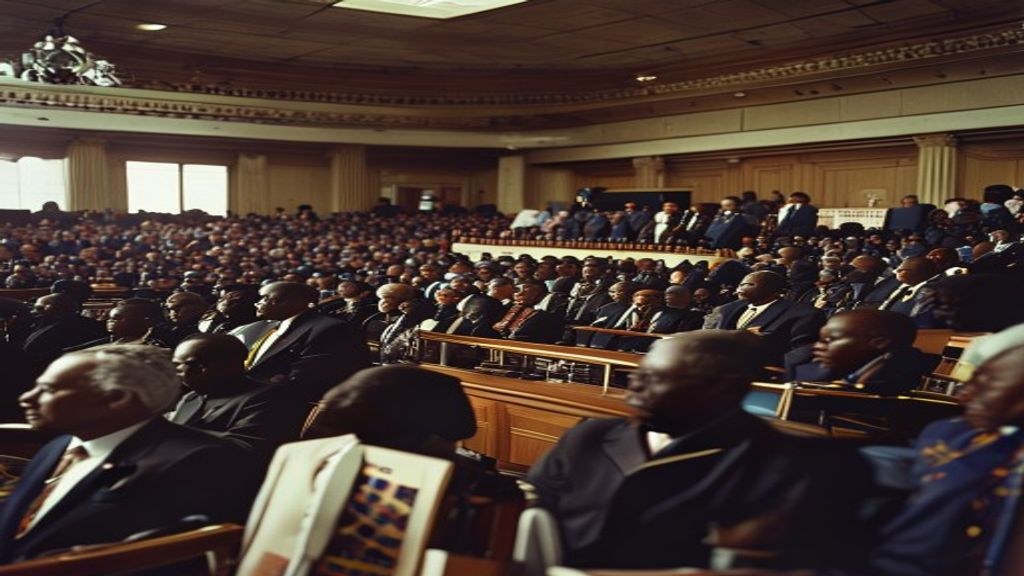
Eish, 30 years after apartheid ended, are we still building the 'rainbow nation' or just rearranging the deck chairs on the Titanic? Parliament and UNISA just had a serious jol about it. More than 250 people – including former president Thabo Mbeki – gathered at the National Assembly in Cape Town to chew over whether the promises of 1994 have actually landed for the average South African. It’s a tough conversation, bru, but one we *need* to have, especially when a trip to Checkers feels like an exercise in financial gymnastics these days.
## So, What Exactly Went Down at Parliament?
The whole thing was officially called a Joint Colloquium on “Celebrating 30 Years of South Africa’s Constitution in a rapidly changing world”. Sounds fancy, right? It was part of the build-up to Africa Day, with the 16th Annual Thabo Mbeki Africa Day Lecture scheduled for May 23, 2026, in Cape Town. Dr. Kayode Fayemi, a former governor of Ekiti State, Nigeria, will be the keynote speaker there.
The colloquium itself wasn’t a shouting match, but a proper think-tank session. Speaker of the National Assembly, Thoko Didiza, put it nicely: it was about taking stock. She highlighted that the National Assembly *already* held a webinar back in May 10, 2026, to reflect on the country’s journey, its successes, and its challenges. This colloquium was just another step in that process. It’s good they’re doing the introspection, but honestly, sometimes it feels like they're talking *at* us, not *with* us.
## Mbeki's 'I Am An African' – Still Hits Different?
Professor Puleng LenkaBula, the Vice-Chancellor of UNISA, dropped a truth bomb about Mbeki’s iconic ‘I am an African’ speech. She said it wasn’t just a feel-good moment, but an “ethical declaration” that acknowledged the messy, complicated history we all carry. Remember Mbeki declaring, “I am formed of the migrants who left Europe to find a new home… I’m a grandchild of the men and women who were torn from the continent of Africa… I come from those who were transported from India and China”? It's still a powerful sentiment, bru.
LenkaBula rightly pointed out that the Constitution was supposed to *give legal form* to that vision of a united, inclusive South Africa. But the big question hanging in the air, as she put it, is: has that promise been fulfilled “for all who uttered that ‘I’”? It’s a fair question, especially when you see the gap between the Sandton millionaires and the folks struggling to make ends meet in Khayelitsha.
## The Big Question: Dream Deferred or Promise Fulfilled?
This is the crux of the matter, isn't it? Has the Constitution delivered? Didiza seems to think so, at least partially. She said the foundations of “strong institutions” have been laid, that we have a “legislative sector” developing “transformative” legislation, a “strong judiciary” dispensing justice, and constitutional bodies respecting human rights. It *sounds* good on paper.
But let’s be real. How many of us feel like we’re living in that reality? Load shedding alone is enough to make you question everything. And while the judiciary might be strong, it's often slow as molasses. The ideal and the reality feel miles apart.
## Agenda 2063 & The Pan-African Parliament: Are We Actually Moving Forward?
Didiza also talked up Agenda 2063, the African Union’s blueprint for the continent's development, and the Pan-African Parliament. She said Agenda 2063 has helped us "reimagine the Africa we want" and that the Pan-African Parliament has developed “model laws” to harmonize legislation across the continent. Sounds good in theory. But let's be honest, the Pan-African Parliament feels a bit like a talk shop sometimes. We need action, not just resolutions.
## Strong Institutions… Or Just Looking Good on Paper?
Didiza insists we've built a “functional state” with strong institutions. But are they *really* functioning? Sure, we have a judiciary that theoretically delivers justice, a legislature that theoretically makes laws for the people, and civil society organizations that theoretically hold power to account. But are these institutions genuinely independent and effective, or are they hampered by corruption, inefficiency, and political interference? The jury’s still out, bru.
## What Does This Mean for the Average Boet (and Business Bru)?
This isn’t just academic navel-gazing. This debate impacts your everyday life. It impacts why your biltong costs more, why you can’t rely on the electricity staying on, and why your business might struggle to compete. If the Constitution isn’t delivering economic opportunity and a stable environment for everyone, then what’s the point? The fact that we are still grappling with fundamental issues 30 years later is deeply concerning, and it’s costing us all.
## Looking Ahead: What's Next for SA's Constitutional Democracy?
The colloquium was a start, a chance to reflect. But reflection without action is just…well, kak. We need more than just talk. We need concrete steps to strengthen our institutions, address inequality, and build a more inclusive economy. The challenges are immense, but so is our potential. We need to figure out how to translate the ideals of the Constitution into tangible benefits for all South Africans, from the braai boet to the business bru.
Look, 30 years on, the Constitution remains a powerful symbol of hope and a foundation for our democracy. But hope alone won’t pay the bills or fix the potholes. While the framework is there, the execution is still seriously lagging. It's time to stop rearranging the deck chairs and start actually steering the ship.
But here's the real question: with the elections looming, and so much at stake, can our political leaders *actually* deliver on the promises of a better future, or are we destined to repeat the mistakes of the past?