cars
1
Chinese Cars Are Coming For Your Bakkie (And Your Wallet)
June 21, 2026
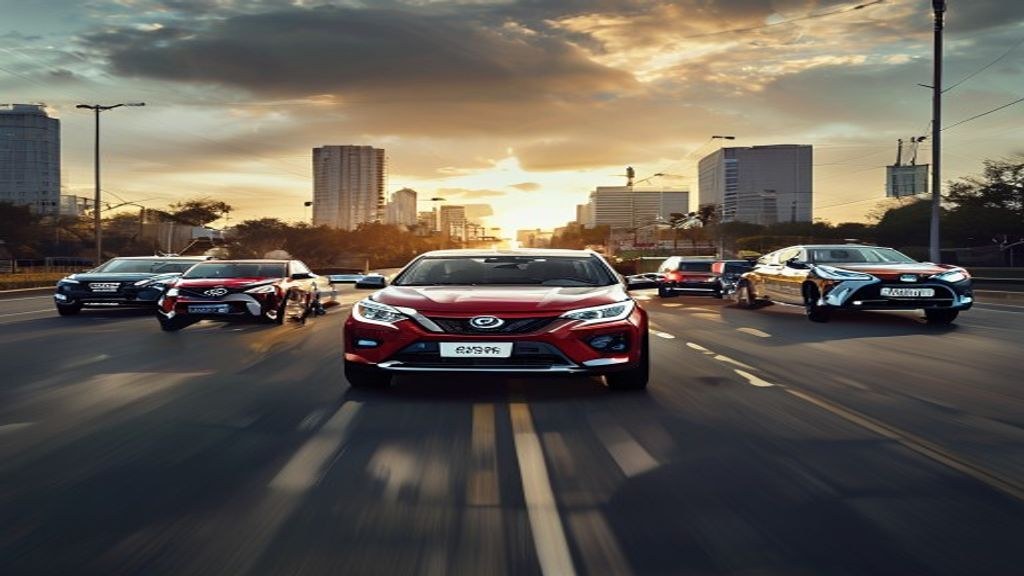
By 2026, you might be choosing between a Toyota, a Ford, *and* five different Chinese bakkies – and that’s not necessarily a good thing, bru. We’re talking a full-on invasion, a wave of Cherys, Havals, and names you’ve probably never even heard of, all vying for a slice of the South African bakkie pie. Is this a lekker opportunity for consumers, or are we heading for a befok situation where quality gets sacrificed at the altar of price? Let's unpack this.
## The Invasion Has Begun: How Many Chinese Brands Are *Actually* Here?
The Chinese are no longer messing around. It’s not just cheap clothes from China Mall anymore. They’re building cars, and they’re bringing them here. Haval has been leading the charge for a while now, making serious inroads with their H6 SUV and various bakkie options. Chery is another big player, and they're not shy about it. But the real story is the sheer *number* of brands now sniffing around our market.
You’ve got:
* **Haval:** Already established, gaining traction.
* **Chery:** Aggressive marketing, expanding range.
* **Geely:** Slowly building a presence.
* **JAC Motors:** Been here a while, but quietly.
* **FAW:** Another long-term player, mainly focusing on commercial vehicles, but branching out.
* **Tank:** A newcomer, but making waves with its rugged, off-road focused vehicles.
And honestly, bru, there are more coming. The market is getting crowded faster than a Durban beachfront on New Year's Eve.
## Price Wars: Are These Cars Actually Lekker Value?
Let's be real, the price is what's grabbing everyone's attention. A Haval H6 can undercut a comparable Toyota RAV4 by a significant margin. A Chery Tiggo 8 Pro is seriously competitive with the likes of a VW Tiguan. But a low price tag isn’t the whole story. You need to look beyond the sticker.
Takealot is great for a bargain TV, but you don't expect the same longevity as a Samsung, right? It's the same principle here. Running costs – fuel consumption, maintenance, parts availability – these are crucial. Resale value is another huge factor. Will a Chinese bakkie hold its value like a Toyota Hilux or a Ford Ranger? Currently, the jury’s still out. Checkers loyalty points are lekker, but they won’t save you if your new bakkie is constantly in the workshop.
## Build Quality & Reliability: The Elephant in the Braai Room
This is the big one, the question everyone is asking: will these cars last? Reports on build quality are…mixed, to put it politely. Some reviews praise the improvements in recent models, while others highlight issues with fit and finish, and concerns about long-term durability. Finding qualified mechanics who know these cars isn't going to be as easy as finding someone to fix your Golf in Sandton.
And parts? Eish. Sourcing parts could be a headache. You’re not going to walk into every Dis-Chem and find a spare part for a Geely. It’s a risk. A big one.
## What Happens When They All Start Competing With Each Other?
A saturated market isn’t always a good thing. Think about it: if ten brands are all fighting for the same customers, they're going to start cutting prices. That sounds good for us, right? Not necessarily. It can lead to a race to the bottom, where quality suffers and brands start failing. We could see dealerships closing, service networks collapsing, and a whole lot of frustrated customers left with cars they can’t get fixed. It’s a bit like a Bafana match – lots of hype, but sometimes a disappointing result.
## The Impact on the Used Car Market: Your Old Bakkie's Future
If everyone is suddenly snapping up shiny new Chinese bakkies, what happens to the value of your existing vehicle? The influx of new supply will inevitably put downward pressure on used car prices. Your trusty Hilux, which held its value like a good bottle of KWV 10-year-old, might suddenly be worth a lot less. This is especially true for older models. It's a tough pill to swallow, but it’s a reality we need to consider.
## Load Shedding & The Chinese Auto Industry: A Surprisingly Important Connection
Here’s a curveball. China absolutely dominates the global battery technology market. They’re miles ahead of everyone else in terms of production capacity and innovation. South Africa is, slowly but surely, moving towards electric vehicles. And guess who’s going to be supplying the batteries and components? You guessed it.
This could be a huge opportunity for Chinese manufacturers to further solidify their position in the South African market. But it also raises questions about local manufacturing and our ability to compete in the EV space. It’s a complex situation, bru, and it’s something we need to pay close attention to.
## So, Should You Actually Buy a Chinese Car?
Look, it’s not a simple yes or no. Chinese cars have come a long way, and they offer a compelling value proposition. If you're on a tight budget and you need a reliable vehicle, a Chinese bakkie might be worth considering. But you need to do your research. Understand the risks. Be prepared for potential challenges with parts and service. And don’t expect the same resale value as a Toyota or a Ford.
For the savvy South African car buyer, a Chinese car can be a viable option – *if* you go in with your eyes wide open. But if you value peace of mind, long-term reliability, and strong resale value, you might be better off sticking with the established brands.
Now, we've talked bakkies. But what about the future of motoring in SA? Is hydrogen fuel the next big thing, and will we even *have* petrol stations in 20 years? Click here to find out.