cars
3
Hyundai's Electric N Cars Are About To Get… Weirder? (And We're Here For It)
June 23, 2026
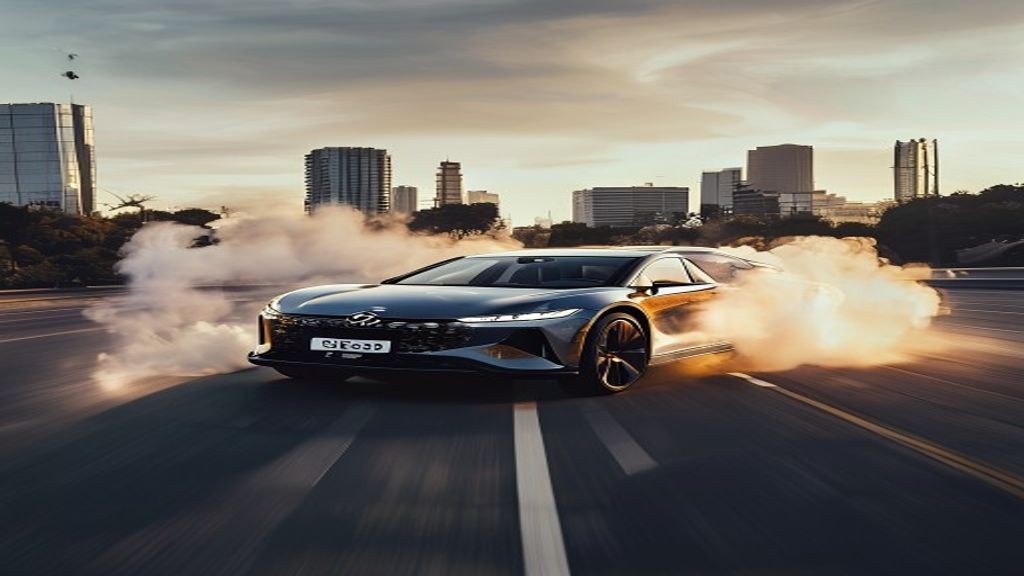
Forget silently gliding around Sandton – Hyundai wants its next electric N cars to *feel* like they're about to blow a gasket, complete with fake backfires and shuddering seats. Jislaaik.
## So, They're Adding *What* To An Electric Car?
Look, we get it. Electric cars are quick. Properly quick. But they’re… sterile, aren't they? That missing link for the petrolhead? Hyundai clearly agrees. They're not trying to pretend their electric N cars are something they're not, but they *are* trying to inject a bit of the visceral experience we all crave. Manfred Harrer, Hyundai’s global head of R&D, told Autocar they want to make the next generation of N-branded EVs “even more realistic” when it comes to mimicking internal combustion traits. We're talking idling, backfiring exhausts, and even vibrations in the cabin. It sounds kak, right? Maybe. But also… kinda clever.
Hyundai isn’t shy about this. They're leaning *into* the artificiality, acknowledging that a lot of people will call it fake, but admitting that “people like it, so there is some beauty—and why not play around with it?” This isn’t about beating Porsche on track times, apparently. It's about “fun to drive.” And honestly, after a week of load shedding, a bit of fun is exactly what we need.
## Fake Engine Noises? Seriously?
Okay, let’s address the elephant in the room. Fake engine noises? Really? The Ioniq 5 N already attempts this, belting out “pops and bangs akin to a Looney Tunes soundboard,” according to Car and Driver. It’s a bit much, let's be honest. But Hyundai isn't backing down. They’re doubling down. Harrer says they’re “leading—we are not following—on this technology.”
The goal isn't just to make noise, though. It's to simulate the *feel* of an engine. The vibrations, the subtle shifts in power delivery… things that are completely absent in a traditional EV. Whether it'll work is another story. Imagine trying to convince a seasoned braai master that a gas braai is just as satisfying as a wood one. It’s a tough sell.
## The IMA Platform: What's Changing Under The Skin?
This whole operation hinges on Hyundai’s upcoming Integrated Modular Architecture (IMA). The current E-GMP platform, used in the Ioniq 5 N and Ioniq 6 N, is getting replaced. According to Autocar, the IMA platform isn’t a “revolution like the first generation,” but a “huge evolution.”
What does that mean in practice? Well, it’ll utilize “next-generation 800-volt technology” for faster charging and better thermal management. Crucially, it'll also be more adaptable to incorporating these artificial sensations. Think more sophisticated haptic feedback systems, more powerful actuators for cabin vibrations, and a more refined sound system capable of producing convincing engine noises. It’s all about creating a more immersive, engaging driving experience.
## Why Bother? The Psychology of the Petrolhead EV
This isn't just about performance figures, bru. It's about psychology. Hyundai’s N division isn’t trying to convert die-hard petrolheads overnight. They're trying to bridge the gap. They understand that for many of us, the driving experience isn’t just about getting from A to B quickly; it’s about the emotional connection to the car. The sound, the feel, the *soul*.
By adding these artificial sensations, Hyundai is attempting to tap into that emotional connection. It’s a bit like Nando’s trying to recreate the flavour of a proper peri-peri chicken – you know it’s not quite the same, but it hits the spot. They’re aiming for fun, not outright racetrack pace.
## What Does This Mean for South Africa?
Will South Africans embrace these “silly” EVs? That’s the big question. The Ioniq 5 is already available here, and it's gaining traction, but it's still a niche product. The price is a major barrier to entry. Load shedding doesn’t help either – nobody wants to buy an EV if they can’t reliably charge it.
But if Hyundai can deliver an EV that *feels* more engaging, more visceral, it could broaden the appeal. Imagine cruising down the Durban beachfront with a simulated V6 rumble… it might just turn a few heads. It’s a gamble, but it's a gamble worth taking.
## Are Hyundai Losing the Plot, or Are They Onto Something?
Honestly? I think they’re onto something. It's a bold move, and it’s not without its risks. There will be purists who dismiss it as gimmicky and inauthentic. But for a wider audience, particularly those who are hesitant about making the switch to electric, these artificial sensations could be the key to unlocking the EV experience. It’s about making electric cars feel less… alien.
Hyundai isn’t trying to replace the thrill of a naturally aspirated engine. They’re trying to recreate *some* of that thrill in an electric package. And if they can pull it off, they could be onto a winner.
## Beyond the Bangs: What Else is Hyundai N Cooking Up?
Hyundai N’s ambitions extend beyond just fake engine noises. They’re constantly experimenting with new technologies and pushing the boundaries of what’s possible. Harrer mentioned that demos of the IMA platform are “already running”, suggesting that we’ll see these innovations in action sooner than we think. They’re not revealing too much just yet, but expect to see further enhancements in areas like handling, responsiveness, and overall driving enjoyment. They're not the "serious Porsche guys," and they're making no apologies for it.
**Verdict:** Hyundai’s strategy is undeniably quirky. It’s a bit left-field. But in a world of increasingly sterile and homogenous electric cars, it’s also refreshingly different. It's a gamble, but one that could pay off big time. If they can nail the execution, these 'silly' EVs could actually be…befok.
So, will this artificiality actually make you feel more connected to your EV, or will it just leave you feeling a bit confused? And more importantly, will these features even make it to our shores, considering the challenges of the South African market? Click here to find out what other befok innovations Hyundai is planning for the future of electric performance.