cars
2
Forget the G-Wagon, This US$1.3 Million Electric Fan Car Will Blow Your Mind (And Your Bank Account)
July 03, 2026
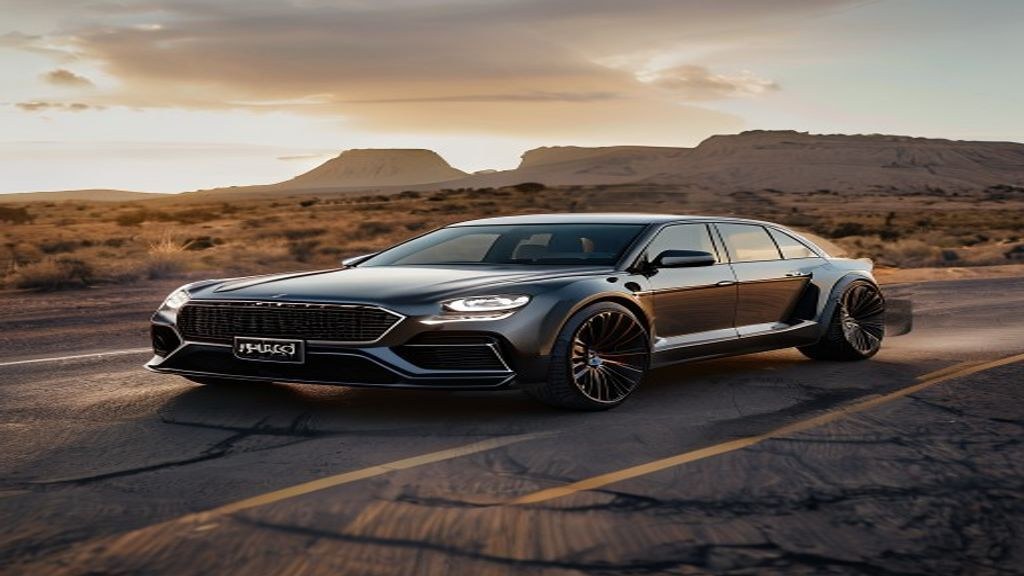
For US$1.3 million, you could buy a smallholding in the Karoo, a fleet of Nando’s franchises, *or* a car that uses fans to stick itself to the road like a befok limpet – and goes 0-60mph in under 1.6 seconds. Seriously. This isn’t some Elon Musk fever dream; it’s the McMurtry Spéirling Pure, and it’s finally available to order. Forget your fancy Sandton status symbols, this thing is on another level.
## So, What Exactly *Is* This Fan Car Kak?
Okay, let's be real. A car that uses fans for downforce sounds like something you’d build in your garage after a few too many Castle Lights. But the McMurtry Spéirling Pure isn’t some backyard project. It’s a direct descendant of prototype race cars that were busy bending the laws of physics. The core idea is simple – brutally simple, actually. Two underbody fans spin at up to 23,000 rpm, sucking air *out* from under the car. This creates a vacuum, literally gluing the vehicle to the tarmac.
It’s not a gimmick, bru. This isn't about looking cool (although it *does* look properly wild). It's about generating insane downforce – up to 4400 pounds of it. That’s more than a whole lot of Golf GTIs. The prototypes have been setting records since 2022, and now they've finally figured out how to make a road-legal version.
## Under 1.6 Seconds? Is That Even Legal?
Let’s just let that sink in for a moment. Under 1.6 seconds to 60mph. That’s faster than your brain can process the fact that you’re pressing the accelerator. The Spéirling Pure boasts a claimed top speed of 190 mph, but honestly, who’s going to be testing that on the N1? The real magic is the cornering. That 4400 pounds of downforce means you can carry speeds through turns that would have other hypercars begging for mercy.
To put that into perspective, consider this: the Spéirling Pure can generate that downforce *while standing still*. Forget traction control; this thing *is* traction. It's frankly ridiculous. It makes even the fastest cars you see at Kyalami look… pedestrian.
## From Prototype to Production: What's Changed?
The Spéirling hasn’t just been slapped with headlights and sent on its way. McMurtry says 95 percent of the parts are new. The biggest change? The battery. The prototypes ran on a 60-kWh pack, but the Pure gets a significantly larger 100-kWh battery. This required stretching the wheelbase by nearly 8 inches to 86.6 inches. That extra space also contributed to a more spacious cockpit – a small win for those of us who aren’t contortionists.
They've also added a second hinged door (thank goodness), a swan-neck rear wing, and even a trunk – big enough for a helmet and HANS device, thankfully.
## Inside the Cockpit: More Befok Than Your Average Bakkie?
Don’t expect luxury, boet. This isn’t a Rolls-Royce. The interior is focused, purely focused, on performance. You get an F1-style steering wheel, a digital display, and a bespoke seat custom-molded like something you’d find in a Le Mans prototype. They even offer air conditioning, because even people who can afford a US$1.3 million car get hot in the sun.
The steering system has been switched from electrically assisted to hydraulic for a more “feelsome” experience, and the cabin is customizable. It’s functional, it’s purposeful, and it’s a world away from the leather-lined comfort of your average BMW.
## R1.3 Million… Is It Worth the Damage to Your Bank Account?
Okay, let’s address the elephant in the room. US$1.3 million. That’s… a lot of money. That’s enough to buy a seriously lekker house in Cape Town CBD, or a small fleet of bakkies. So, is it worth it?
That depends. If you’re looking for a comfortable daily driver, absolutely not. This is a track weapon, a statement piece, a rolling piece of engineering insanity. You’re paying for exclusivity, cutting-edge technology, and performance that borders on the unbelievable.
Compared to other hypercars, it’s… unique. A Bugatti Chiron will cost you a similar amount, but it doesn’t have the Spéirling’s fan-based downforce system. It's a different kind of experience. It's the kind of thing a billionaire buys just to say they have it.
## Can You Even Charge This Thing in South Africa?
This is where things get tricky. Load shedding. Need we say more? The Spéirling Pure can charge from 20 to 95 percent in as little as 20 minutes using a DC fast-charger – *if* you can find one that’s actually working. Thankfully, McMurtry has thought of this. They’ve created a 100-kWh portable storage unit with a 120-kW output, so you can charge the car anywhere, anytime.
But let's be honest, you’re probably going to have a dedicated team of people handling the charging logistics for you if you can afford a US$1.3 million car.
## So, Who's Actually Buying This, And Where Will They Drive It?
The target market? People who participate in time attack events, track days, and enjoy the sheer bragging rights that come with owning something this insane. You won’t be seeing this thing stuck in traffic on the M2. It’s built for speed, for precision, for pushing the limits of what’s possible.
Will we see one at Kyalami? Maybe. Probably not regularly, but it’s not entirely out of the question. Someone, somewhere, is going to want to prove their Spéirling is the fastest thing on four wheels in South Africa.
The McMurtry Spéirling Pure isn't about practicality; it’s about pushing boundaries. It’s a technological marvel, a performance beast, and a serious flex. It’s overpriced, undoubtedly, but for the right buyer – the one who values engineering and exclusivity above all else – it’s a befok statement.
But is it the smartest investment? That's a question for another day. Speaking of investments, are NFTs actually worth the hype, or are they just another bubble waiting to burst? Click here to find out.
Based on reporting by
https://www.caranddriver.com/news/a71798584/mcmurtry-speirling-pure-revealed/