tech
4
AI is Coming For Your Job (And Your Data, Eish)
Alpha South Editorial Team
July 07, 2026
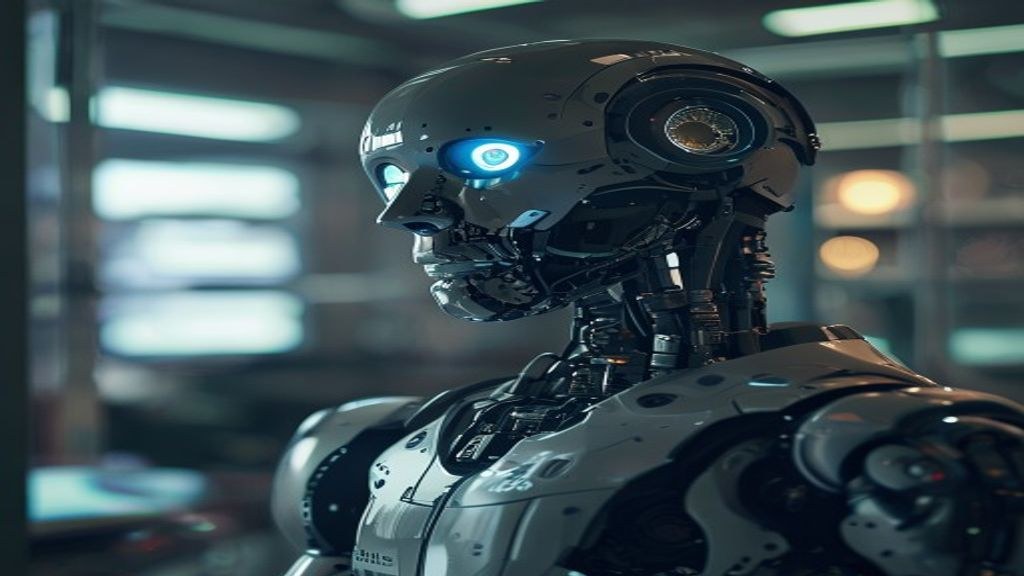
While you’re stressing about load shedding and whether the Boks can pull it together, a silent revolution is happening – and it’s about to make a whole lot of South Africans redundant. We’re not talking Skynet levels of robot uprising, but a creeping, data-driven shift that’s going to hit our job market harder than a Durban July stampede. This isn’t some far-off future, bru. It’s happening *now*.
## So, What's This AI Kak All About?
Let’s be real, most of us hear "AI" and think of those creepy deepfakes or self-driving Teslas. But it’s far more insidious – and already woven into the fabric of our daily lives. Think about it: Google, the digital oomph behind everything from your Gmail to your YouTube addiction, is already deploying AI to deliver and maintain its services. They track outages, protect against spam, fraud, and abuse – all powered by algorithms that are getting smarter by the second.
It's not just about flashy tech. AI is about taking mountains of data and finding patterns. That means automating tasks, predicting behaviour, and, yes, replacing jobs. You think Checkers is just offering you Xtra Savings? Think again. They're collecting data on your shopping habits to personalize offers and, ultimately, optimize their entire operation with AI. This is happening everywhere, from Nando's figuring out which peri-peri level you prefer to Takealot predicting what you’ll buy next.
## The Jobs Most At Risk: Are *You* On The List?
Eish. This is where it gets uncomfortable. If your job involves repetitive tasks, you need to start sharpening your skills, because AI is coming for it. Call centres are in the firing line – why pay a human to answer basic questions when a chatbot can do it 24/7? Data entry? Forget about it. Even some white-collar jobs are vulnerable. Accountants, paralegals, even some marketing roles are facing disruption.
The sectors most at risk? It’s tough to put an exact number on it, but consider this: any job where a computer can consistently outperform a human in terms of speed, accuracy, and cost is on the chopping block. We're talking about significant shifts in employment, and South Africa, with its already high unemployment rate, can't afford to be caught napping.
## Google Knows More About You Than Your Ouma – And That's The Problem
Let’s talk about the elephant in the room: data. Google isn’t building this AI in a vacuum. It’s fueled by *your* data. Every search, every email, every YouTube video you watch – it’s all being analyzed to improve their services and, crucially, to target you with ads.
According to Google’s own documentation, they use cookies and data to “develop and improve new services,” “deliver and measure the effectiveness of ads,” and “show personalized content, depending on your settings.” They even admit to showing “personalized ads, depending on your settings” based on your “past activity from this browser, like previous Google searches.”
Jislaaik. That’s a lot of information. And while Google offers options to manage your privacy settings (g.co/privacytools), let’s be honest, how many people actually read those terms and conditions? We’re handing over our digital lives on a silver platter, and it’s powering an AI revolution that we barely understand.
## The Skills Gap is Yawning: Are Our Schools Befok?
Here's the harsh truth: South Africa’s education system isn’t preparing our kids for this future. We’re still churning out graduates who lack the critical thinking, problem-solving, and digital skills needed to thrive in an AI-driven economy. The gap between what our schools teach and what the job market demands is widening, and it’s a serious problem.
We need a massive investment in STEM education – science, technology, engineering, and mathematics. We need to encourage coding bootcamps, online courses, and lifelong learning. We need to equip our teachers with the skills they need to prepare the next generation for the challenges ahead. Frankly, the current situation is befok.
## It's Not All Doom and Gloom: How To Future-Proof Yourself
Okay, enough doom and gloom. There *are* things you can do to protect yourself. Upskilling is no longer optional, it's essential. Consider learning to code, even if it’s just the basics. Explore online courses in data analysis, AI, and machine learning. Develop your soft skills – communication, collaboration, creativity. These are things AI can't easily replicate.
Embrace lifelong learning. The job market is changing so rapidly that you need to be constantly updating your skills and knowledge. Think of it as a marathon, not a sprint. And don’t be afraid to pivot. The job you have today might not exist tomorrow.
## The Billion-Dollar Question: What's the Government Doing About This?
Honestly? Not enough. There’s a lot of talk about the Fourth Industrial Revolution, but very little concrete action. We need government initiatives to support upskilling programs, incentivize companies to invest in AI training, and create a regulatory framework that protects workers while fostering innovation.
We also need to address the digital divide. Millions of South Africans still lack access to affordable internet and digital devices. How can we expect them to participate in an AI-driven economy if they’re not even connected?
## Is AI Just Another Sandton Playground for the Rich?
This is the big question, isn't it? Will the benefits of AI be shared equitably, or will they accrue to the already wealthy and powerful? Will AI exacerbate existing inequalities in South Africa, creating a two-tiered society where the haves thrive and the have-nots are left behind?
The risk is real. If we don’t proactively address the challenges posed by AI, it could become just another Sandton playground for the rich, while the majority of South Africans are left to struggle.
**Verdict:** AI is a game-changer, and South Africa needs to wake up and smell the algorithms. It’s not about fearing the future, it's about preparing for it. Upskilling, investing in education, and proactive government intervention are crucial to ensure that AI benefits all South Africans, not just a privileged few.
But here's the kicker: is the metaverse just another shiny distraction from the real economic challenges facing South Africa, or could it be a genuine opportunity for growth and innovation? Click here to find out.